A dark psychological thriller that unravels silence, secrets, and control beneath the city’s glossy surface.
I’ve always been fascinated by the kind of silence that isn’t peaceful, the kind that presses against your ears until you start hearing your own thoughts a little too loudly. That’s where Black Silk Red Neon was born, from the space between what people say and what they really mean.
When I started writing it, I didn’t want another flashy crime story. I wanted something quieter, more personal, and far more dangerous. The story lives in whispered confessions, late-night messages, and the invisible strings people pull to make others dance. In this dark psychological thriller, silence isn’t the absence of noise. It’s control wearing perfume.
The Anatomy of Silence
Silence in fiction is rarely neutral. In Black Silk Red Neon, silence becomes a weapon. The characters don’t just avoid speaking; they manipulate absence.
- Laney, the protagonist, learns that every unspoken word in her city has weight.
- Mercer, the antagonist, uses silence like a recording engineer, tuning, muting, and amplifying what he wants others to hear.
- Sarah, a voice caught between the living and the lost, proves that sometimes what isn’t broadcast is more dangerous than what is.
When I wrote these dynamics, I wanted readers to feel that same claustrophobic hush I felt while drafting it, the eerie quiet before a confession. In dark fiction, silence becomes a mirror. What’s not said tells us who’s truly in control.
Silence, after all, is never empty. It’s full of motives.
Secrets in Plain Sight
Every psychological thriller thrives on secrets. But in Black Silk Red Neon, the secrets aren’t buried. They’re displayed like trophies, disguised as art, podcasts, and performances.
That was intentional. I wanted to explore how we hide in plain sight. Today, we broadcast everything, our lives, emotions, opinions, yet what we choose not to share often reveals more. The story plays with this paradox.
Laney hosts a true-crime podcast. She dissects other people’s tragedies, not realizing she’s documenting her own. The line between performance and confession blurs until she can’t tell which version of herself is real.
That’s the essence of dark psychological thrillers. They hold up a mirror, then shatter it. The reflection that remains isn’t meant to comfort. It’s meant to confront.
In my writing process, I leaned heavily on the mechanics of controlled revelation. I treated every secret as a loaded gun on the table. The tension didn’t come from pulling the trigger but from waiting for someone to notice the gun was there in the first place.
The Architecture of Control
Control is the bloodstream of Black Silk Red Neon. Every character either seeks it, loses it, or pretends to have it.
Mercer, the central manipulator, doesn’t dominate through violence or wealth. He controls through rhythm. His words, his timing, his calculated pauses, they all function like a psychological metronome. The more the other characters try to escape his influence, the more they fall into sync with it.
I wanted control to feel seductive, not brutal. Because in the real world, control often looks like comfort. It’s the lover who finishes your sentences, the mentor who praises you just enough to keep you dependent, the friend who knows when to stay quiet.
When we talk about control in dark psychological fiction, we often think of external forces such as governments, institutions, or villains. But the truest form of control is internal. It’s the voice in your head whispering, Don’t speak. Don’t move. Don’t look too closely.
That’s what Black Silk Red Neon explores, not how power is taken, but how willingly we surrender it.
Crafting the Mood
Writing a psychological thriller isn’t about the plot twists. It’s about emotional texture.
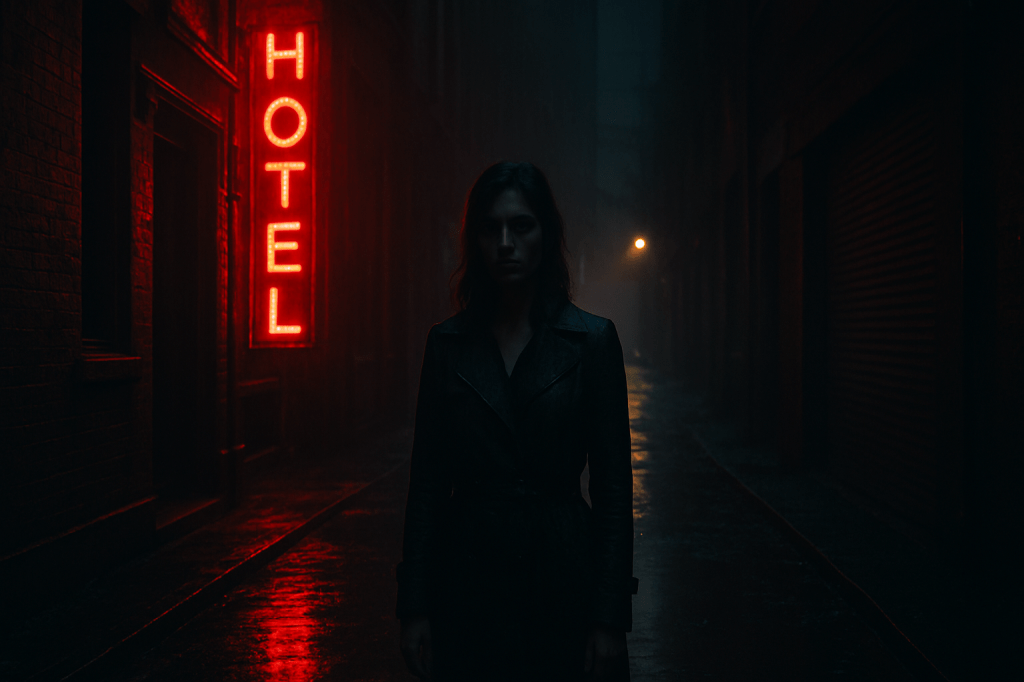
For Black Silk Red Neon, I built the atmosphere before I even outlined the story. The city became a character, its alleys, neon signs, and static-filled radios humming with secrets. The visuals mattered as much as the dialogue. I wanted readers to feel the heat of a flickering light, the vibration of sound bleeding through walls, the tension in a pause before someone lies.
To achieve that, I used techniques from noir cinema and ASMR sound design. Every sensory detail was deliberate. A door didn’t just open; it creaked in rhythm with the protagonist’s heartbeat. A silence wasn’t just empty; it was charged and electric.
That’s the advantage of being an indie dark fiction writer. You can break structure. You can let sound, silence, and sensory detail lead the story instead of dialogue.
When I look back, I realize Black Silk Red Neon isn’t just a story about control. It’s about composition. Every word, pause, and breath is orchestrated like music.
The Power of Vulnerability
Beneath the violence, manipulation, and suspense, what truly drives this story is vulnerability. I wanted readers to see how fragile we all become when someone truly listens, or when they pretend to.
Laney’s descent into Mercer’s psychological trap isn’t about naivety. It’s about need. Her desire to be understood blinds her to the cost. That’s a truth I think resonates deeply with anyone who’s ever been emotionally manipulated. Control often begins with empathy.
The scariest characters aren’t the loud ones. They’re the ones who know when to stay quiet, who make you fill the silence yourself.
In that sense, Black Silk Red Neon isn’t about a villain winning. It’s about the human mind surrendering to its own echoes.
Why Indie Dark Fiction Matters
The indie dark fiction scene allows writers like me to take risks that traditional publishing often can’t. We’re not bound by formulas. We don’t need our endings to be neat.
Indie writers can explore the uncomfortable, the intimacy of psychological warfare, the beauty in tragedy, the slow decay of trust. We can experiment with pacing, structure, and even format. Some of my readers experience Black Silk Red Neonnot as chapters, but as frequencies. They tune in. They listen. They decode.
In many ways, this is the evolution of the modern psychological thriller. It’s interactive, multi-sensory, and immersive. It’s not just a story you read. It’s one that seeps into you.
If you’re curious about this growing movement, explore communities like Reedsy Discovery or IndieReader where indie authors redefine genres through experimental storytelling.
FAQ: Understanding the Dark Psychological Thriller
What makes a story a dark psychological thriller?
A dark psychological thriller focuses on the human mind as the battlefield. Instead of external threats, the tension comes from internal conflict, manipulation, obsession, and fear. The dark element adds moral ambiguity and emotional weight. It’s not about who survives, but who changes.
How does Black Silk Red Neon differ from traditional thrillers?
Most thrillers rely on action and external stakes. Black Silk Red Neon thrives on subtlety and psychology. The violence is emotional before it’s physical. It explores how silence, memory, and guilt can destroy a person long before a weapon does.
Why use silence as a storytelling device?
Because silence forces participation. When readers face a pause, they fill it with their own fear or interpretation. It’s a shared illusion between writer and reader. In Black Silk Red Neon, silence becomes an active character that drives the plot.
Is indie dark fiction just for niche audiences?
Not at all. Indie dark fiction is growing because readers crave authenticity. They want stories that don’t sanitize emotion or simplify morality. The indie space gives writers the freedom to create nuanced, daring narratives that major publishers might overlook.
What inspired the title Black Silk Red Neon?
The title reflects duality, softness and danger, allure and corruption. “Black Silk” represents the intimacy of secrets, while “Red Neon” symbolizes exposure, obsession, and the artificial light we hide under. Together, they capture the paradox of control and vulnerability.
Closing Reflections
When I think about Black Silk Red Neon, I don’t see it as a thriller about murder or revenge. I see it as a story about the quiet wars we fight inside our heads.
It’s about how silence can become a form of power, how secrets build empires, and how control often disguises itself as love.
And maybe, at its core, it’s about what happens when the noise finally stops, and all that’s left is the hum of your own thoughts, asking if you were ever truly free.
Step Into the Shadows with Me
If you’ve made it this far, congratulations, you’ve officially survived the silence. But don’t stop here. There’s more mystery, madness, and storytelling mischief waiting for you.
If you enjoy exploring dark psychological thrillers, come hang out on my writing home base at PassiveWriting.com where I spill secrets about creativity, storytelling, and the chaos of being an indie author. For deeper dives and weekly thought pieces, visit my Medium profile where things get a little more personal, a little more dangerous, and definitely more fun.
Want to talk books, crime, or caffeine-fueled writing nights? You’ll find me lurking on Facebook, tossing out random thoughts on X, and pretending to be serious on LinkedIn.
If you like exclusive stories, behind-the-scenes drafts, and digital goodies, sneak over to my Gumroad page where I share eBooks and creative resources. And for the wild ones who enjoy serialized storytelling, step into my neon-lit corner of fiction at Wattpad.
So grab a chair, stay a while, and keep your headphones close. The stories are only getting darker, louder, and a lot more human.