A dark psychological thriller eBook release that unravels silence, secrets, and the dangerous weight of what we keep hidden.

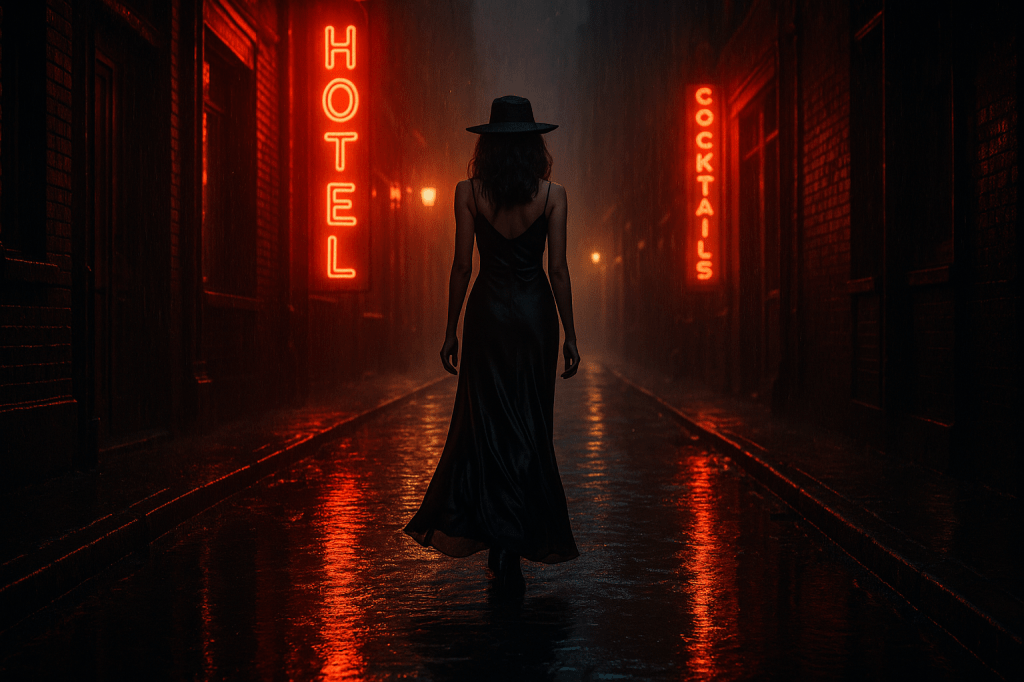
Have you ever noticed how silence carries weight? Not the gentle silence of a rainy afternoon nap, but the kind that presses on your chest and makes you listen harder. That silence has a voice, even if it doesn’t use words. It lingers after an argument, it follows you down an empty hallway, it crawls into bed with you when you are trying to fall asleep. That voice is what inspired me to write Blood Whispers: Silence Never Forgets, my newly released eBook in the dark psychological thriller genre.
I have always been fascinated by how silence speaks louder than noise, how it hides secrets, and how it shapes our fears. This book is my way of exploring those moments when quiet turns sinister, when secrets boil beneath still waters, and when the softest whisper feels like a scream.
The Psychology of Whispers
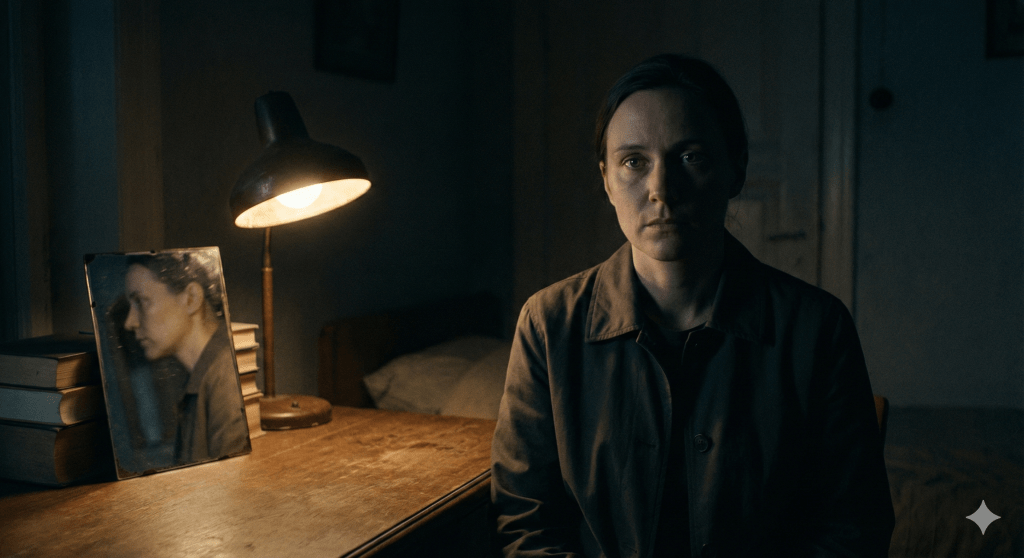
Whispers are peculiar things. They are both intimate and unsettling. A whisper can be a secret shared between lovers or a rumor passed in a crowded hallway. But in the dark, whispers take on a life of their own. They feel closer than they should, almost as if they are brushing against your skin.
Psychologists explain that our brains are wired to notice faint sounds more at night. Evolution trained us to pay attention when everything else is still. That is why a floorboard creak or a hushed voice behind a door grabs your attention so fiercely. It is not just paranoia. It is a survival instinct.
I experienced this once while staying in an old farmhouse. At 2 a.m., I heard what I thought was someone whispering in the next room. I froze. My heart pounded like a drum. In the morning, I discovered it was the wind slipping through the cracks of the window. Rationally, I knew that, but in the moment, the whisper felt alive. That exact tension between logic and fear is the soil where psychological thrillers grow.
Fear as Entertainment
Why do we crave stories that scare us? You might think, after long days of stress, we would want light comedies or comforting tales. But no, many of us curl up with thrillers, horror, and mysteries that make us shiver.
The answer is simple. Fear in fiction is safe. It lets us test our limits without facing real-world consequences. Think of a haunted house at a carnival. You walk in knowing the monsters are actors, but your pulse races anyway. That is entertainment wrapped in adrenaline.
When I first read The Silence of the Lambs, I remember closing the book at midnight, then immediately reopening it because I could not leave the story unfinished. My body wanted rest, but my mind wanted answers. That is the paradox of fear. It terrifies and seduces us at the same time.
In Blood Whispers, I lean into this by building tension in quiet spaces. It is not just the scream in the night. It is the pause before it. That pause is where readers lean in, hearts pounding, eyes racing across the page.
Why Secrets Never Stay Buried
Everyone has a secret. Some are small, like sneaking the last cookie. Others are monumental, like carrying guilt for something unspeakable. But secrets, no matter their size, create weight. They fester in silence until they demand release.
A neighbor of mine once vanished overnight, leaving behind nothing but a note taped to her door that read: “Don’t look for me.” She was never seen again. Her absence became the biggest story on our street. People speculated endlessly. Was she running from someone? From herself? From something worse? No answers ever came, but her absence echoed louder than her presence ever had.
Secrets, in thrillers, work the same way. They drive the plot forward. They shape characters in ways nothing else can. Blood Whispers lives in this space where secrets refuse to stay buried, where silence becomes the witness to every hidden truth.
Writing in the Witching Hour
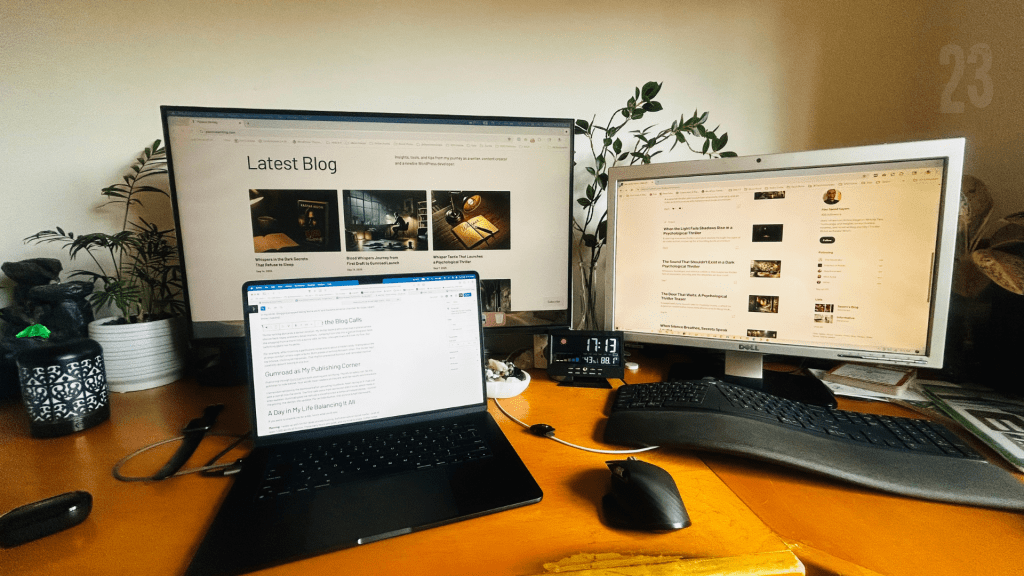
Most of Blood Whispers was written between midnight and 3 a.m., the hours many call the witching hour. There is something about the world at that time that feeds creativity. The streets outside are hushed, neighbors are sleeping, even the air feels heavier.
I would sit at my desk with a mug of lukewarm coffee, the lamp casting long shadows, and let the silence swallow me. Sometimes, I scared myself with the smallest noises: a creak from the radiator, a car door slamming blocks away. That heightened state of awareness bled into my writing.
Folklore often paints the witching hour as the time when spirits walk, when the veil between worlds thins. Whether or not you believe that, it is hard to deny the feeling that something strange stirs in those hours. Writing then felt like collaborating with the night itself.
The Strange Comfort of Darkness
As odd as it sounds, thrillers can be comforting. They let us rehearse fear. When you read about a character walking into danger, your brain practices survival without real risk. It is like running drills for your emotions.
I once read a study that said people who watch more horror films reported less anxiety during real-world crises. It makes sense. If you have faced monsters on screen, real problems feel more manageable.
For me, thrillers are also grounding. Life is unpredictable and sometimes cruel. But within the pages of a story, fear follows structure. There is a beginning, a middle, and an end. That is a kind of control reality rarely gives us.
Humor in the Shadows
Not every moment in a thriller is doom and gloom. There is humor in how fear catches us off guard. Like the time my cat knocked over a spoon while I was writing a tense scene. I nearly leapt out of my chair, convinced a ghost had come to critique my prose.
Fear often flips into laughter because the body reacts the same way to both. That is why in Blood Whispers, I let moments of absurdity peek through the shadows. A nervous laugh can be more haunting than a scream, because it admits you are not sure which you are feeling.
What Silence Remembers
Silence is not empty. It remembers. It records every betrayal, every harsh word, every goodbye left unsaid. Later, when you least expect it, silence whispers those memories back.
I have felt this in the quiet moments of my own life. Standing in an empty kitchen after a fight, or sitting alone on a train, I have heard echoes of things long past. That is the silence I wove into Blood Whispers. A silence that does not forgive, does not forget, but waits for the right moment to return.
The Real World Between the Pages
Thrillers may be fiction, but they grow out of reality. Abandoned houses, unsolved crimes, and the way people lower their voices when telling uncomfortable stories, all of these are seeds.
When writing Blood Whispers, I visited old libraries and deserted streets at night, just to soak in atmosphere. One evening, walking through an underpass, I found a single shoe in the dirt. That image lodged in my mind. Whose shoe was it? Why only one? Questions like that are the heartbeat of thriller writing.
The Journey from Silence to Story
Every story has a journey, and Blood Whispers is no exception. It began as fragments of memory, fears, and questions that would not leave me alone. Slowly, it became a narrative, shaped by the silence around me and the whispers within it.
When you read it, I want you to feel like you are walking beside me through those midnight hours. To hear the creak of floorboards. To wonder if that shadow just moved. To realize that silence is never empty. It is full of stories waiting to be heard.
Final Thoughts
Life is noisy, crowded with conversations, alarms, and endless chatter. But in the end, it is silence that defines us. Silence after loss. Silence after secrets break. Silence after the last word is spoken.
Blood Whispers: Silence Never Forgets is my attempt to capture that truth and turn it into a thriller that lingers long after the final page. It is a journey from real life into fiction, from noise into stillness, from secrets into whispers.
And if you ever find yourself awake in the witching hour, listening to the quiet, remember this: silence has a voice. And it is always waiting to be heard.
And now, dear reader, if you’ve made it this far without checking over your shoulder at least once, I’m impressed. Clearly, you and I share the same taste for quiet suspense and the occasional spine-tingling pause. Which brings me to something less spooky but far more important: staying in touch.
If you enjoy wandering with me through these shadows of stories, I’d love for you to subscribe to my latest posts on PassiveWriting (click here to subscribe). That way, every fresh article I write can skip the dark alleys of the internet and land directly in your inbox, safe, sound, and whisper-free.
Curious about who’s behind all these words and why I choose to spend my nights listening to silence instead of sleeping? You can peek into my backstory and ongoing creative misadventures over on my About Me and My Works page (explore here). Think of it as pulling back the curtain—no smoke machines or jump scares involved.
Of course, none of this journey would be possible without the kind support of readers like you. If you’d like to sprinkle a little generosity my way (and keep me stocked with midnight coffee while I wrestle with haunted manuscripts), you can support my writing on Ko-fi (buy me a coffee here). Even the smallest donation feels like a standing ovation from the shadows.
And finally, for those of you who feel ready to step deeper into the heart of my stories, I invite you to discover my eBook Blood Whispers: Silence Never Forgets (find it here). It’s a dark psychological thriller crafted to keep you awake, turning pages while the world outside sleeps. If silence has ever made you uneasy, this book might just explain why.
So, whether you’re here for the stories, the secrets, or the spoons my cat knocks over at 2 a.m., thank you for being part of this journey. The whispers are always louder when we listen together.